About Triton & Shell
History
Triton & Shell – Paper Art Hub opened its doors to the public in 2025. It was created in response to the need for a permanent space in Greece dedicated to the study, documentation, and presentation of paper as a historical, technical, and artistic material.
The project developed around a Historical Archive and a specialised library, which continue to grow through the acquisition of books, periodicals, ephemera, paper samples, tools, papermaking moulds, equipment, and archival material from Greece and abroad.
An exhibition space and specialised studios for handmade papermaking and bookbinding were established alongside the collection, allowing historical research to connect with practical application, education, and contemporary artistic creation.
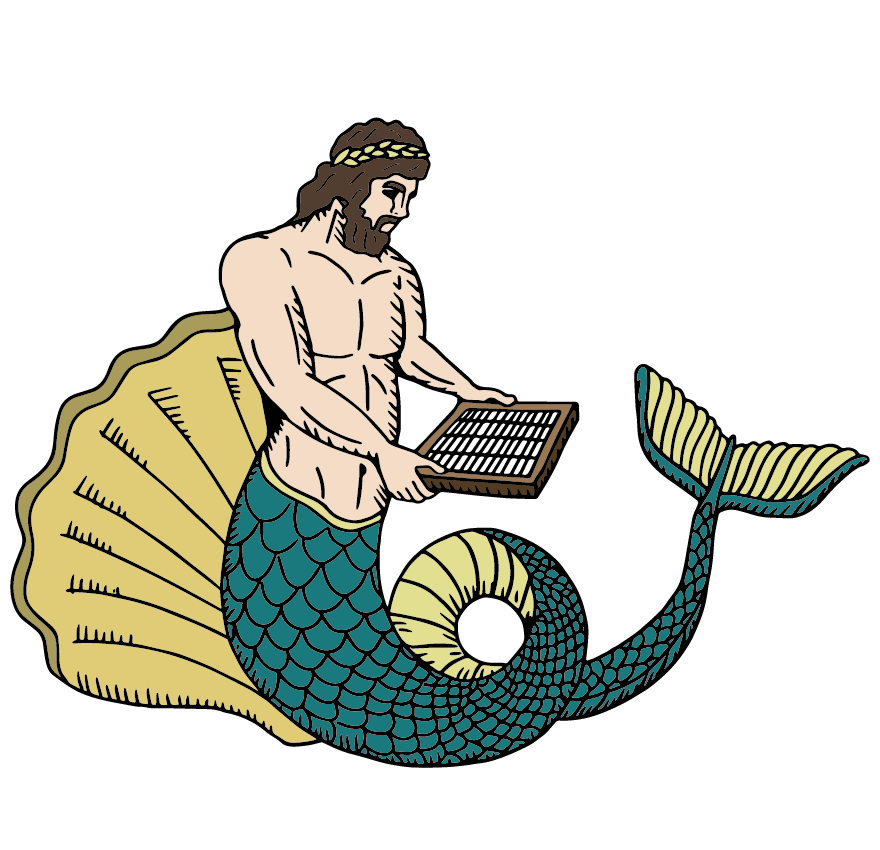
The Myth Behind the Name
Historically, Greece did not develop a tradition of handmade papermaking comparable to those that emerged in other parts of Europe and Asia. We therefore wanted to create a symbolic connection: to weave paper into the fabric of Greek culture, beginning not with History, but with Myth.
In searching for a mythological figure who could be associated with paper, we turned to Triton, a figure closely connected with water — an element fundamental to the making of paper. The relatively few surviving myths surrounding him leave space for new narratives, and from this emerged our own imaginary myth about Greece and the art of papermaking:
They say that once, in the waters of Lake Tritonis — where today the desert meets the salt flats of Chott el Djerid, in the heart of ancient Libya, in present-day Tunisia — Triton dwelt. Son of Poseidon and Amphitrite, he was associated with both fresh and sea waters.On those shores, according to tradition, Athena was born; not from a womb, but from the head of Zeus — radiant, fully armed, and wise. Triton, witnessing this divine birth, felt an unfamiliar desire: to become associated not with power, but with knowledge. And so, when Athena ascended to Olympus, he decided to offer her people a gift worthy of the goddess.From plant fibres and fresh water he formed a thin sheet — flexible and strong, the first handmade paper. He taught the Athenians how to make it. But the Athenians, like so many people in every age, preferred what was already familiar: papyrus and, later, parchment. And so Triton’s gift was forgotten.Centuries later, the art of papermaking developed in China and, through a long historical journey westward, spread throughout the world.
This myth is not a historical account. It is a symbol: an act of reconnecting with something that never existed — but might have.
Because paper, like myth, is born again each time it is touched through acts of creation.